Streamlining referral workflows to reduce burnout
Read blog


Rather than relying on a single communication method, multi-channel outreach for healthcare uses data, not assumptions, to reach every patient.
summary
A single communication channel can't meet every patient where they are. A multi-channel patient access strategy combining SMS, Voice AI, email, and self-scheduling closes healthcare access gaps at scale. CommonSpirit Health avoided nearly 446,000 manual calls using multi-channel care gap outreach, proving that automated, data-driven engagement reduces missed appointments and contact center overload.
In a digital-first era, patients expect flexibility in accessing their care. Whether through self-scheduling, after-hours chat, portal support, or two-way text conversations, communication must be personalized and timely.
A multi-channel strategy combines SMS, Voice AI, email, and web-based support into a single, coordinated workflow to reach patients at scale.
The results are measurable: CommonSpirit Health avoided nearly 446,000 manual calls through a multi-channel care gap outreach program, while Catholic Health projects annual savings of $360,000 with multi-channel automation for MyChart HelpDesk.
Most importantly, patients remain connected throughout their care journey.
Here’s why you should consider implementing a multi-channel access strategy at your health system.
Access and communication barriers remain all too common experiences. Long wait times, callbacks to schedule appointments, or delays in help finding a convenient facility frustrate patients.
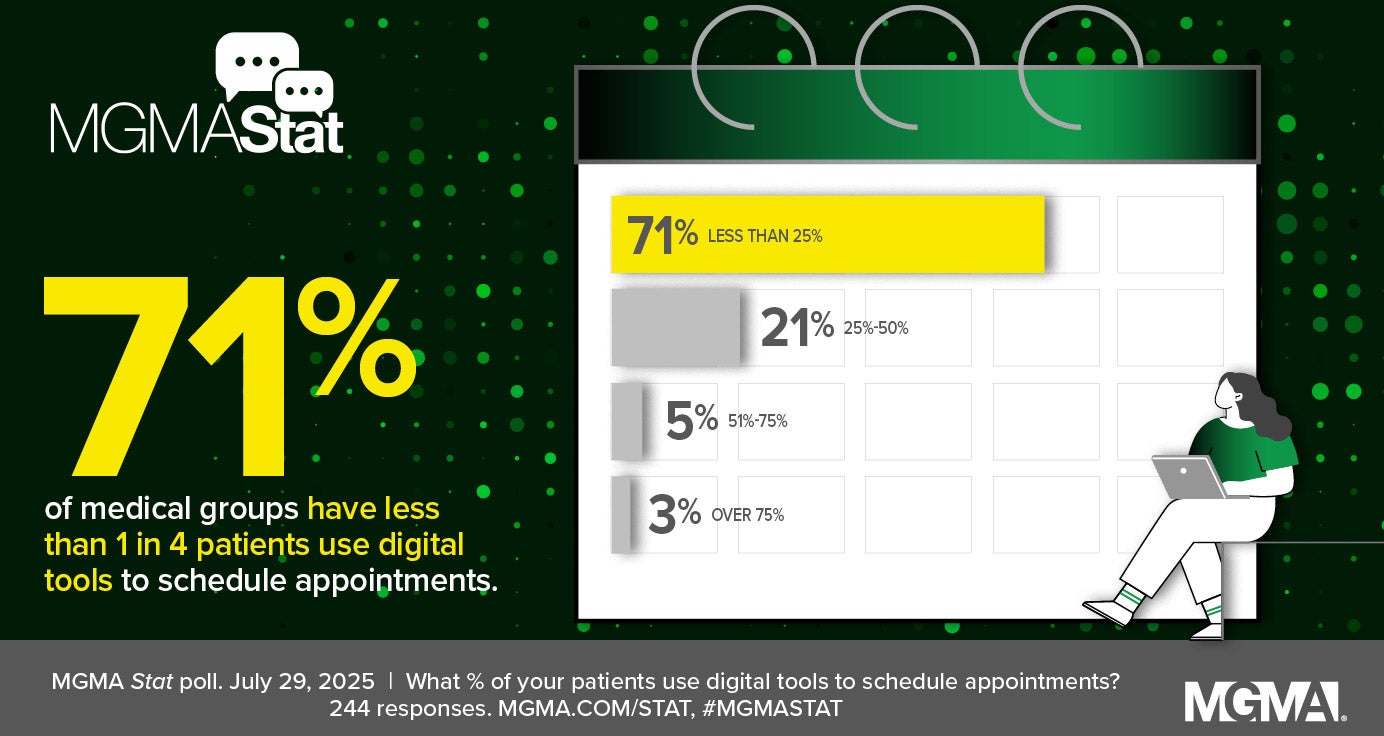
In most physician practices, only a small fraction of patients use digital tools to book appointments themselves. MGMA found that 71% of practices have fewer than 25% of their patients self-schedule, even though almost half of physicians indicated that patient scheduling was the most important patient-experience function for their success.
Health systems face many of the same challenges. Limited patient-facing capabilities make access more difficult than it should be, and contact centers become overwhelmed when patients can’t self-serve.
Southwest General Health Center uses a multi-channel workflow to schedule radiology appointments, which includes visual self-scheduling. Patients receive a secure link and can view available appointments by location, date, and time, and then select a slot themselves. By allowing patients to see the schedule visually, compare available times, and book immediately – receiving a call if they don’t complete the process – that access gap closes and more patients schedule their next visit without adding to staff workload.
A multi-channel outreach strategy helps remove barriers to access.
In a study of more than 250,000 adults aged 50 and older with chronic conditions, 61% had activated their MyChart account, while only 54% had logged at least one session.
The study identified disparities in portal engagement across age, race, language, education, and certain chronic conditions.
These findings highlight persistent digital inequities. Multi-channel engagement provides multilingual, literacy-appropriate strategies to expand equitable access, enabling health systems to reach entire patient populations.
Catholic Health reduced a major barrier to MyChart access by adding another communication channel: patients who could not log in, reset a password, retrieve a username, or manage proxy access could call a voice AI agent that could provide immediate assistance instead of waiting for a human help desk agent. Within the first few months, the voice agent had handled more than 25,000 MyChart support calls, eliminated hold time and call abandonment, and most importantly, created an always-on digital access channel for routine access needs so that patients could access care whenever they needed it.
Some patients prefer to communicate via text, others prefer phone calls, and some prefer patient portals to access their healthcare information.
An automated workflow in multi-channel strategies is more effective than a standard message for all patients. Tailored communication addresses chronic conditions, care gaps, and preventive care for personalized access.
It also provides a back-up system in the event that one channel doesn’t work. If a patient doesn’t schedule on the portal, a voice agent can call them. If they don’t pick up, they can receive an automated text message to book at their convenience. Meeting the right patient at the right time is a moving target, and multi-channel access increases the odds of hitting at the right moment.
A typical workflow might begin when a referral, care gap, or appointment need is identified. The health system can then:
Health systems can also combine multiple workflows, not just multiple communication channels, to complete an end-to-end task. For example, a referral workflow might read and categorize an incoming order, notify the patient by text, answer questions through two-way messaging, offer available appointments, and send reminders after the visit is booked. A care gap workflow might identify eligible patients through chart review, reach out by SMS or voice, schedule the needed visit, and trigger pre-visit instructions and follow-up reminders.
Behind the scenes, every step integrates with the EHR for real-time data sync. Next steps are scheduled, automated, and informed by data. With a foundation established, health systems can scale the multi-channel workflows to priority areas such as care gaps, medication adherence, and contact center optimization, ultimately keeping patients engaged between visits and reducing missed appointments and missed opportunities to close gaps in care.
CommonSpirit Health needed to better reach underserved populations and close care gaps at scale. The organization delivered more than 350,000 AI care gap outreaches in one year, along with an additional 139,000 AI broadcast messages. The outreach volume in one year alone underscores the value of automation in a multi-channel strategy.
Outreach for its prescription refill program produced measurable results: 91% of participants scheduled appointments after receiving AI messages notifying and reminding them that a PCP visit was required before their next pickup.
As more patients self-schedule appointments, the health system’s contact center handles fewer calls – with each avoided call saving an estimated 6 minutes of agent time.
Strategies that remind, guide, and engage patients make access a convenient — and reliable — part of the healthcare experience.
Patients are calling. How many ways can you answer?