
How the most mundane task in healthcare became Montage Health’s biggest win
Read blog


See how Catholic Health proved voice AI on its MyChart help desk, then replaced a nine-prompt IVR and more than doubled patient authentication.
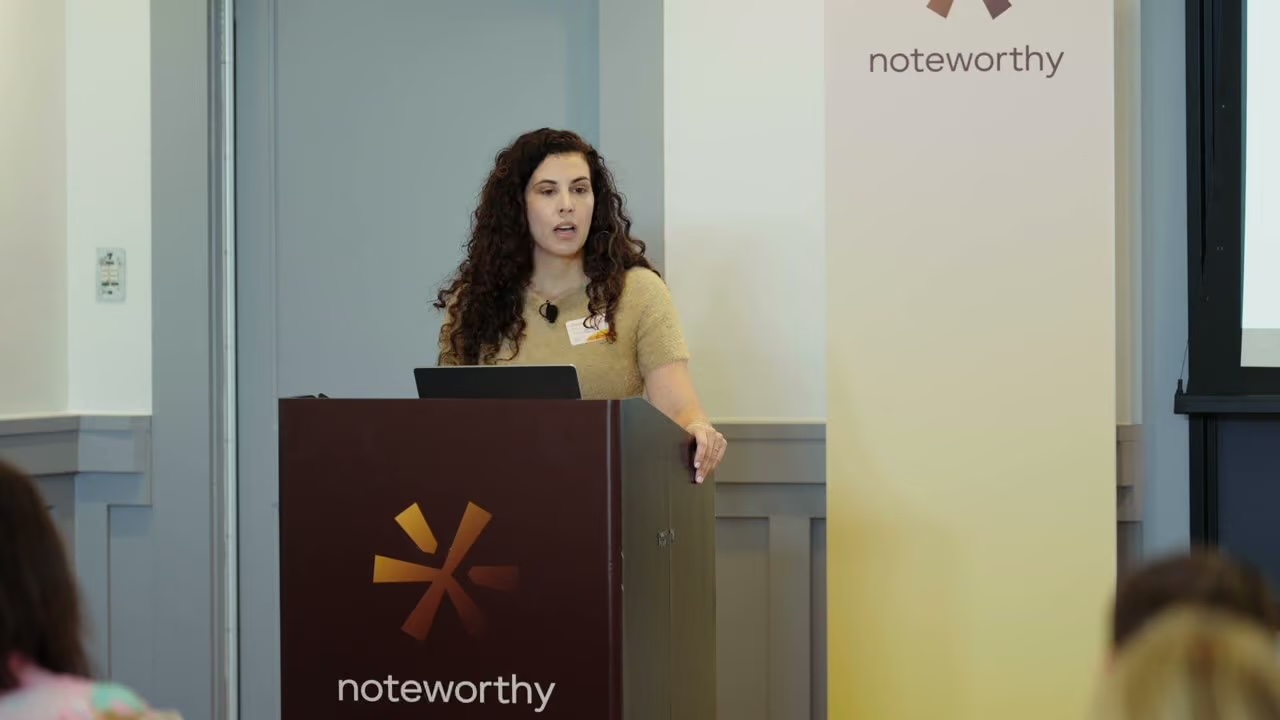
Full session: “Setting the standard for the patient-first agentic call center” with Allison Collins, Catholic Health.
summary
Catholic Health, a six-hospital system on Long Island, launched a voice AI agent for its MyChart help desk in five weeks. The agent now handles two-thirds of about 5,200 monthly calls on its own and is saving $375,000 this year. The health system then replaced the IVR at its primary care practices with a voice agent that authenticates more than 80% of callers before transferring them to schedulers.
Four years ago, Catholic Health on Long Island relied almost entirely on the phone for patient access. Callers sat on hold, got transferred between call centers, and worked through confusing phone menus. At Noteworthy 2026, Allison Collins, VP of Digital at Catholic Health, shared how the system brought voice AI agents into its patient access call centers using Notable’s AI Platform.
Catholic Health started with a controlled pilot: a voice AI agent for its MyChart help desk, which gets more than 5,000 calls a month about passwords, usernames and new accounts. The agent went live in five weeks. It now handles two-thirds of calls on its own and is saving $375,000 this year.
That result won executive support to expand into access. The team replaced a nine-prompt IVR with a voice agent that answers with “How can I help you?” It also more than doubled patient authentication before calls are transferred to schedulers.
Lessons you’ll learn in this session:
Watch the full session to hear how Catholic Health is scaling conversational AI across the patient journey.


Voice AI agents can fully resolve high-volume, predictable calls, such as password resets, account setup, and directions, so those calls never reach a live agent. Complex cases can be routed to humans. At Catholic Health, a voice AI agent now handles two-thirds of MyChart help desk calls on its own, which works out to $375,000 in savings this year at about $10 per call.
Health systems leading the way in voice AI, like Catholic Health on Long Island, score every voice AI agent on key criteria: does it understand the intent of why the patient is calling, does it follow instructions to take the patient down the right path, does it use the right tone and voice, does it hand off to a live agent at the right moment, and does it stay accurate? Calls are reviewed by AI and by humans. The team calibrates the two against each other at launch and runs regression tests after every change.