
How the most mundane task in healthcare became Montage Health’s biggest win
Read blog


Leaders from MIT, UC San Diego Health, and NKC Health share how in-house Builder teams use AI agents to automate workflows and deliver new kinds of ROI.
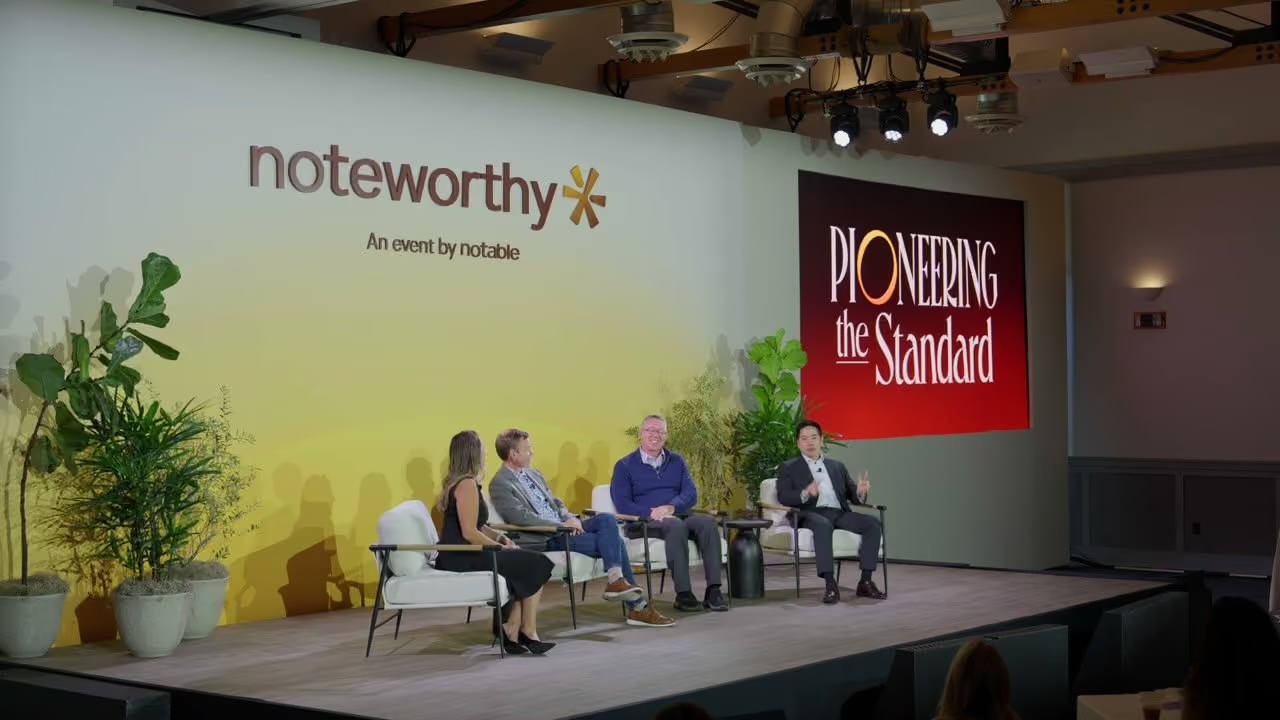
Full session: “The builder advantage: how leading health systems innovate from within” with leaders from MIT Health, UC San Diego Health and NKC Health.
summary
In a Noteworthy 2026 panel, leaders from MIT, UC San Diego Health, and NKC Health explained how they built in-house teams that design and launch AI workflows on Notable’s Flow Builder. They covered how to staff those teams, how to prioritize requests, and how to measure ROI, including value from work that wasn’t possible before AI agents.
What happens when health systems stop waiting on vendor roadmaps and start building AI workflows themselves? At Noteworthy 2026, Notable’s Gabriella Rozenblat talked with three leaders who have launched Builder programs and built AI workflows themselves in Notable’s Flow Builder:
The panelists described a Builder as someone who understands both the technology and the operational problem it solves. They shared how they staff Builder teams, including Jeff’s advice to “always [hire] two.” They also explained how to choose what to build and how to measure success. Brian described a new kind of return he calls “non-Newtonian ROI”: work that simply wasn’t possible before AI agents, such as a three-year retrospective review of incidental imaging findings to check whether each one was followed up.
Lessons you’ll learn in this session:
Watch the full panel to learn how health systems are building in-house capacity to scale AI automation across the enterprise.


Start with people who understand both the technology and the operational workflow. Many teams pair someone with an engineering background with someone who has deep process knowledge. Hire Builders in pairs so they can design and troubleshoot together, and give them a real, manageable problem to solve right away. Builder training cohorts, shared workflow templates and peer communities help new builders learn faster.
Look beyond hard ROI, such as cost savings and revenue, and soft ROI, such as consistency and moving work to the right role. AI agents also create value that wasn’t possible before, like reviewing years of imaging reports to make sure incidental findings were followed up. Before committing resources, define who will build, validate, maintain and own each workflow, and how you’ll know it’s working.