

How the most mundane task in healthcare became Montage Health’s biggest win
Read blog


See how Presbyterian Healthcare automated care gap closure with AI agents, reaching 84,000 patients and hitting 97.8% HCC visit completion.
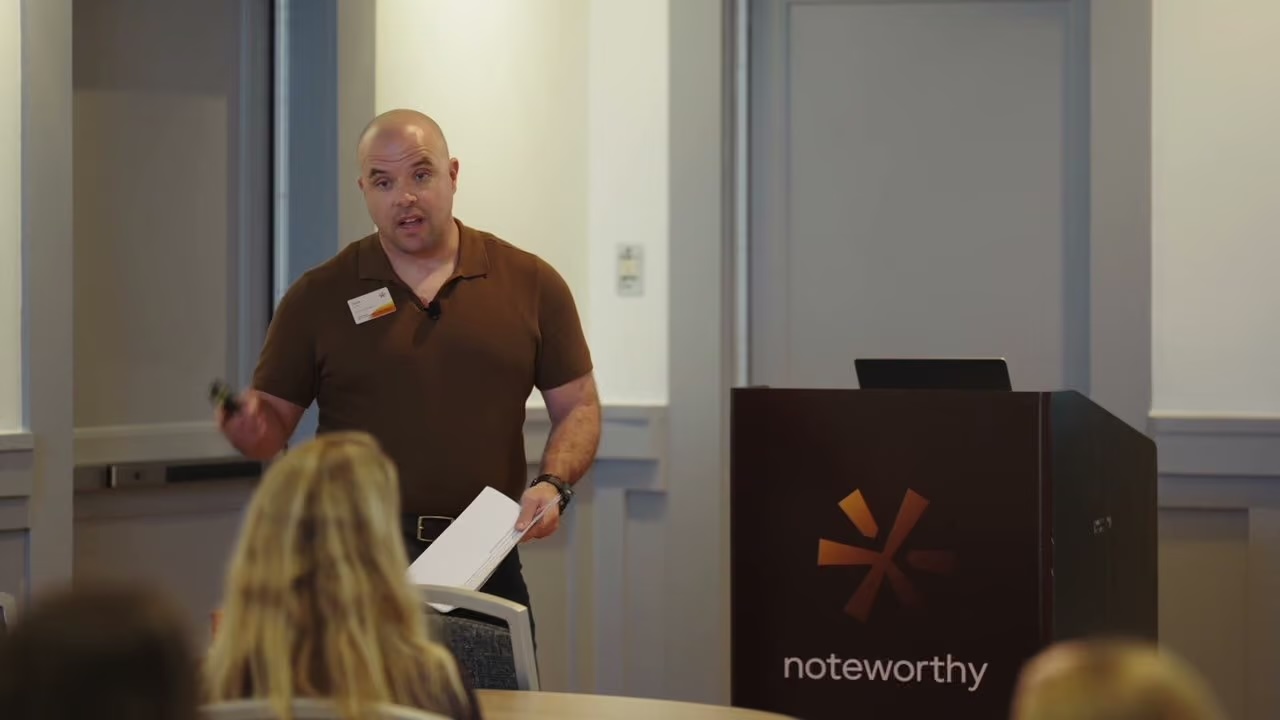
Full session: “The care gap is an operations problem: how health systems are closing it with automation” with Sam Hinton, Presbyterian Healthcare.
summary
Presbyterian Healthcare in New Mexico uses AI agents to automate 17 to 19 care gap workflows. The agents find eligible patients in Epic, reach them by text and email, and route each patient’s response to nurses, who order using standing protocols. Over the last 12 months the program has reached 84,000 patients, and it achieved 97.8% HCC risk visit completion in 2025.
Care gaps follow clear rules and ask patients to take one predictable step, which makes them ideal for automation. Even so, many health systems still close them by hand, using Excel spreadsheets, desk reviews, and phone calls. At Noteworthy 2026, Sam Hinton, Director of Practice Operations at Presbyterian Healthcare, explained how the Albuquerque system replaced that manual work with care gap outreach automation on Notable’s AI Platform.
Presbyterian cares for one in three New Mexicans. Their automation journey began with HCC risk visit outreach in late 2023 and went live in just six weeks. Today, AI agents run up to 19 care gap workflows. They identify patients in Epic, reach them by text and email, and send each patient’s response to nurses, who order using standing protocols. Clinicians stay focused on care that needs them, and patients close gaps from their phones without calling anyone.
Lessons you’ll learn in this session:
Watch the full session to see how Presbyterian is using AI agents to move toward value-based care.


AI agents identify patients who are due for a screening or visit using EHR data, then reach them by text or email. Patients can order a lab, choose an imaging location, or book an appointment right from the message. Their responses go to nurses, who place orders under standing clinical protocols, so physicians don’t have to sign off on routine gaps. At Presbyterian Healthcare, this approach lifted kidney health evaluation closure by 10% without a clinician touching the order.
Start with care gaps that are high in volume, follow clear rules that clinicians already agree on, and ask the patient to take one predictable step, such as getting a lab or booking a mammogram. Common examples include HCC risk adjustment visits, colorectal and breast cancer screening, and diabetes labs. More complex gaps, like lung cancer screening, can come later once protocols, shared decision-making and outreach cadence are in place.