
Back to Value Hub

September 30, 2026

Flow AI
A conversational assistant inside Flow Builder to design, understand, and modify Flows using natural language.
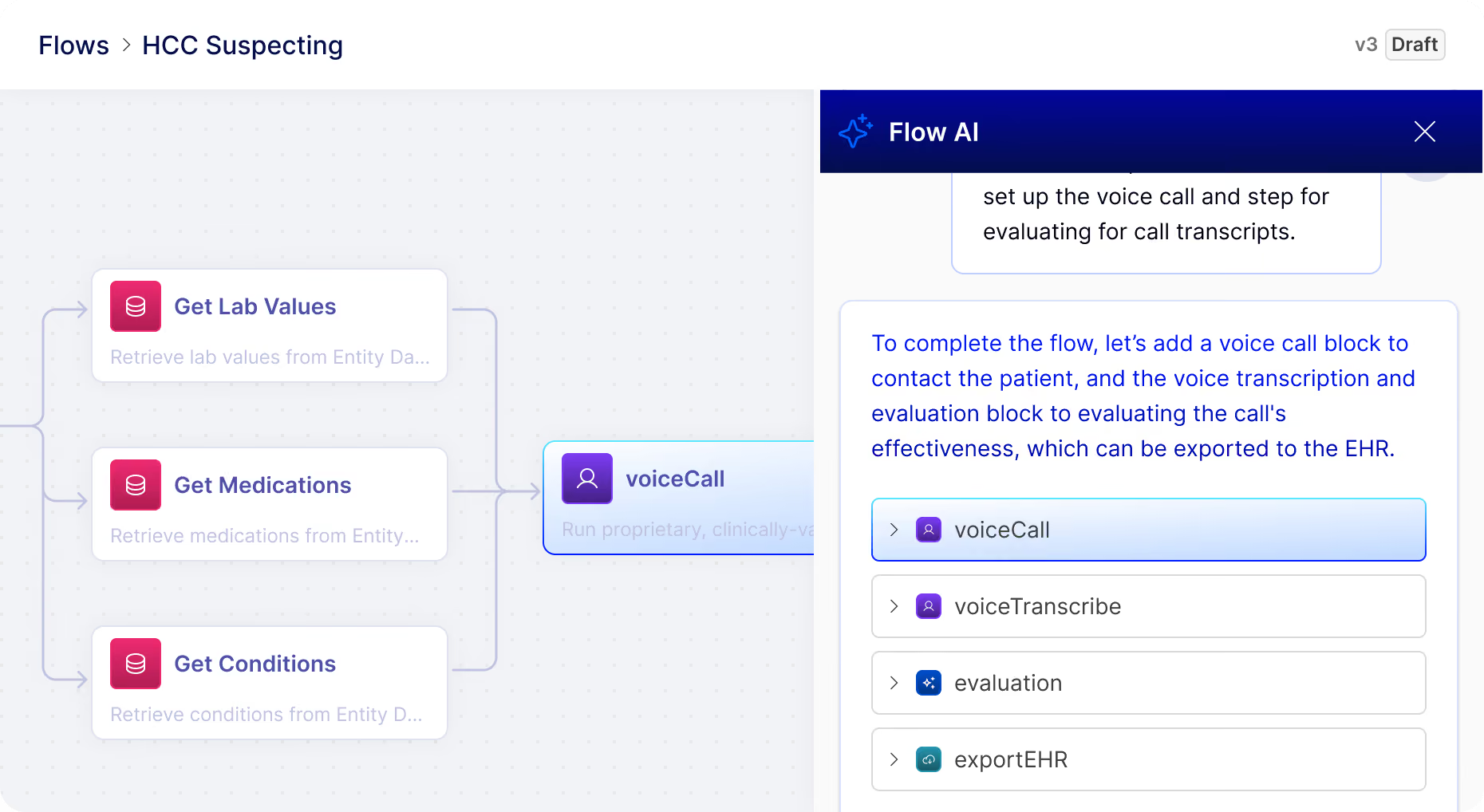
Overview
Flow AI is a conversational assistant embedded inside Flow Builder. It’s an AI co-builder that understands flows, blocks, and platform semantics, allowing Builders to design, edit, and debug workflows using natural language.
Instead of manually wiring every block, Builders can tell Flow AI what they’re trying to accomplish and let it handle much of the configuration, while they stay in control of what gets published.
What Flow AI Does
- Explains and inspects flows
Answers “What does this flow do?”, “Why did this test run fail?”, or “How is this block configured?” by reading the canvas, configs, and run history. - Modifies existing workflows
Updates logic, parameters, and connections across multiple blocks—then shows a preview of proposed changes before anything is applied. - Builds new flows from scratch
Given a prompt like “Create an outbound voice campaign to remind patients of their upcoming imaging appointments and reschedule as needed,” Flow AI scaffolds a working flow that Builders can refine.
Why Flow AI Matters
- Lower barrier to building – Makes Flow Builder accessible to more personas (not just engineers), while preserving governance and review steps.
- Faster iteration – Speeds up experimentation, refactoring, and multi-block changes that would otherwise be tedious.
- Enterprise-grade control – Changes are always reviewable, reversible, and auditable; Flow AI assists, but humans approve what ships.
Example Scenarios
- Troubleshooting a broken flow – A Builder pastes an error into Flow AI, which inspects relevant blocks and suggests fixes—like adjusting a filter or adding a missing connection—before applying anything.
- Extending an existing use case – “Also send a follow-up SMS if the patient hasn’t responded within 48 hours” becomes a concrete update to the flow, with new branches and timers wired for you.
- Standing up a new Quick Start flow – For a customer-specific variation of a standard use case (e.g., referral transcription + specialty scheduling), Flow AI assembles a draft based on platform knowledge and prior patterns, which the Builder then tunes.